
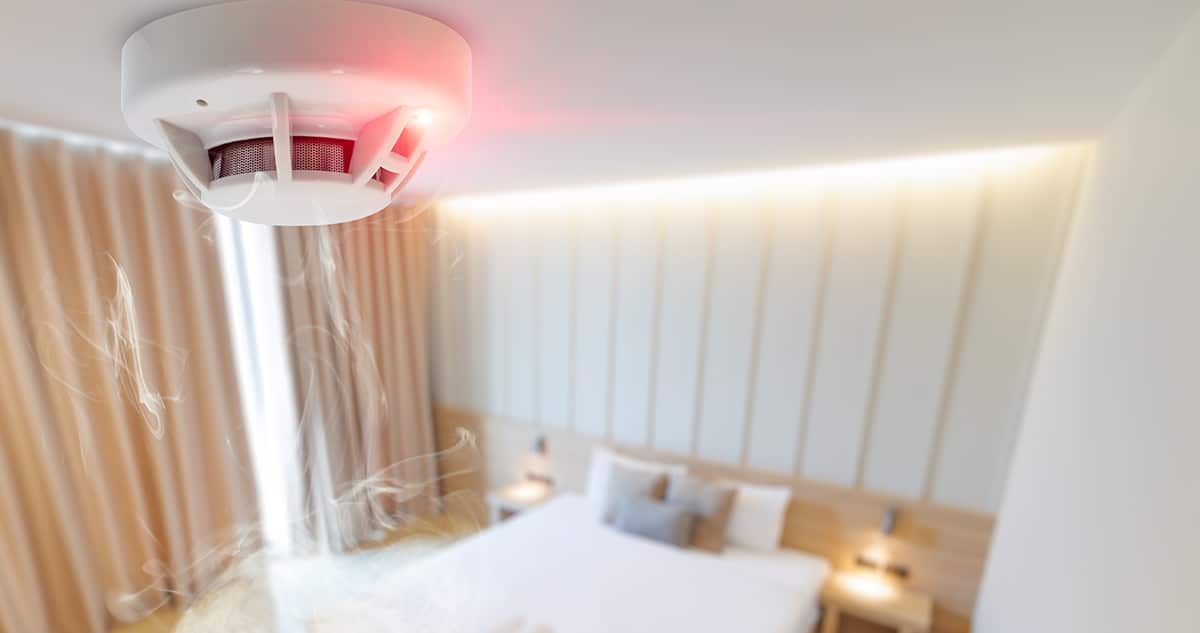
Carbon monoxide (CO) is often called the "silent killer" for a terrifying reason: it is entirely invisible, odorless, and tasteless. You cannot see it, smell it, or taste it. When carbon monoxide leaks into a home, the only warning occupants receive is the piercing sound of a carbon monoxide detector.
According to the Centers for Disease Control and Prevention (CDC), unintentional carbon monoxide poisoning claims the lives of more than 400 Americans every year and sends over 100,000 people to emergency rooms. In Missouri, the Division of Fire Safety emphasizes that heating and cooking equipment burning fuel are primary sources of this dangerous gas inside the home.
Despite the severe risks, many homeowners are unsure of the exact safety protocols required to protect their families. Buying a carbon monoxide detector is only the first step; installing it in the correct location is what actually saves lives. If a detector is placed too close to a furnace, it may trigger constant false alarms. If it is placed too far from a bedroom, you might not hear it while sleeping.
At ABF Security, we have been protecting families across the St. Louis metro area since 1978, and carbon monoxide protection is one of the most important life safety services we provide. In this guide, we will break down exactly where to install carbon monoxide detectors in your home, where you should absolutely avoid placing them, and why integrating these alarms into a professionally monitored security system offers the highest level of protection for your family.
- The Danger of Carbon Monoxide
- Where to Install Carbon Monoxide Detectors: The Essential Locations
- Recommended Placement at a Glance
- Where NOT to Install Carbon Monoxide Detectors
- Proper Installation Height: High or Low?
- The Advantage of Monitored Carbon Monoxide Detectors
- Maintenance and Testing
- Keep Your St. Louis Home Safe: The Right Detectors in the Right Places
- FAQs
The Danger of Carbon Monoxide
To understand why detector placement is so crucial, it is helpful to understand how carbon monoxide operates. Carbon monoxide is a byproduct of incomplete combustion. Anytime fuel (such as natural gas, propane, oil, coal, or wood) is burned, carbon monoxide is produced.
In a properly functioning and well-ventilated appliance, this gas is safely exhausted outside the home. However, if a furnace malfunctions, a chimney becomes blocked, a vehicle is left running in an attached garage, or a portable generator is used too close to the house, carbon monoxide can quickly build up indoors.
Because carbon monoxide mixes evenly with the air rather than rising to the ceiling like hot smoke, it can fill a room from the floor to the ceiling. As occupants breathe in the gas, it displaces oxygen in the blood, leading to tissue damage and, ultimately, death. The symptoms of CO poisoning, including headaches, dizziness, weakness, nausea, and confusion, are often mistaken for the flu. This makes early detection via a loud, well-placed alarm absolutely vital, especially at night when families are asleep and most vulnerable.
This is a reality that the team at ABF Security takes seriously every day. Over our decades of service in the St. Louis area, we have seen firsthand how the right life safety equipment, properly installed and professionally monitored, makes the difference between a close call and a tragedy.
Where to Install Carbon Monoxide Detectors: The Essential Locations
The National Fire Protection Association (NFPA), the Consumer Product Safety Commission (CPSC), and the Environmental Protection Agency (EPA) all provide strict guidelines on where carbon monoxide detectors should be placed to ensure maximum safety. Here are the essential locations in which to install carbon monoxide detectors in your home:
1. Outside Every Sleeping Area
The absolute most critical location for a carbon monoxide detector is in the immediate vicinity of the bedrooms. The CPSC recommends that a detector should be located within 10 feet of each bedroom door.
If carbon monoxide leaks into your home overnight, the alarm must be loud enough to wake up everyone. If your home has multiple bedroom wings or hallways, you need a separate detector for each distinct sleeping area. If you sleep with your bedroom doors closed, the sound of an alarm in the hallway might be muffled. In these cases, it is highly recommended to install an interconnected detector inside the bedroom as well.
2. On Every Level of the Home
Carbon monoxide can originate from various sources on different floors. A furnace in the basement, a gas fireplace in the main floor living room, or a blocked exhaust vent on the second floor can all introduce CO into the home.
Therefore, the EPA and CPSC mandate that a separate carbon monoxide detector must be installed on every level of the home, including the basement. This ensures that no matter where the leak originates, a detector will sense the gas before it has time to migrate to other floors. When ABF Security performs a life safety assessment of a home, one of the first things our technicians evaluate is whether every floor has adequate CO coverage; a step that is frequently overlooked in homes relying on a single, off-the-shelf detector.
3. Near Attached Garages
Vehicles left running in an attached garage are a major source of carbon monoxide poisoning. Even with the garage door open, CO can easily seep into the house through a connecting door.
You should install a carbon monoxide detector in the room or hallway immediately adjacent to the door that connects the house to the attached garage. However, do not install the detector inside the garage itself, as the normal startup vehicle exhaust will cause frequent false alarms.
4. In Rooms with Fuel-Burning Appliances
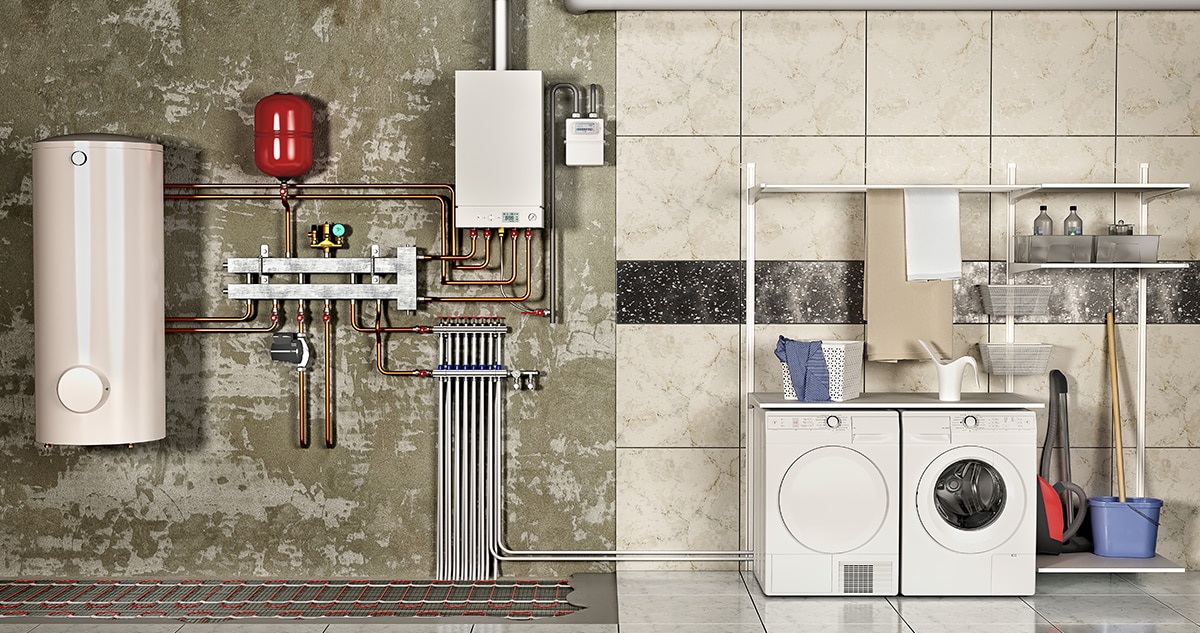
If you have a room that houses a fuel-burning appliance (such as a gas water heater, a gas dryer, or a furnace), a detector should be placed in that room or the immediate vicinity.
However, distance is key here. Detectors should be placed at least 15 to 20 feet away from the appliance itself. Placing a detector too close to a furnace or gas stove can trigger false alarms from the small, harmless bursts of CO that occur when these appliances first ignite. ABF Security's installation technicians are trained to identify these nuances and position detectors in the optimal locations that balance sensitivity with accuracy.
Recommended Placement at a Glance
The following table summarizes the key placement guidelines from the NFPA, CPSC, and EPA:
| Location | Install? | Notes |
|---|---|---|
| Outside each bedroom/sleeping area | Yes | Within 10 feet of every bedroom door |
| Every floor, including basement | Yes | One detector minimum per level |
| Room adjacent to attached garage | Yes | Inside the house, not inside the garage |
| Near fuel-burning appliances | Yes | Keep at least 15–20 feet from the appliance |
| Inside the garage | No | Vehicle exhaust will cause constant false alarms |
| Bathrooms or humid areas | No | Steam interferes with sensor accuracy |
| Near windows, fans, or vents | No | Drafts can dilute CO readings |
| Behind furniture or curtains | No | Dead-air spaces block airflow to the sensor |
Where NOT to Install Carbon Monoxide Detectors
Just as important as knowing where to place your detectors is knowing where not to place them. Incorrect placement can lead to constant false alarms (which might tempt you to remove the batteries) or, worse, cause the detector to fail when you need it most.
Directly above or beside fuel-burning appliances should be avoided, as the small bursts of CO produced during normal ignition will trigger nuisance alarms. In extremely humid areas, such as bathrooms or laundry rooms with poor ventilation, moisture can interfere with the sensor. Direct sunlight and extreme heat near windows or above radiators can physically damage the sensor components over time.
Equally important, never place a detector in a "dead air" space such as behind heavy curtains, inside closets, or tucked behind large furniture. To accurately measure the carbon monoxide concentration in the room, the detector needs unobstructed airflow. Similarly, keep detectors away from drafty areas such as ceiling fans, open windows, and exterior doors, where strong air movement can blow carbon monoxide away from the sensor and cause a delayed or missed reading.
Finally, unconditioned spaces such as unheated attics, crawl spaces, and unfinished garages should be avoided, as extreme temperatures fall outside the operating range of most residential sensors and can lead to sensor failure.
Proper Installation Height: High or Low?
A common point of confusion for homeowners is whether carbon monoxide detectors should be installed high on the wall, low near the baseboards, or on the ceiling.
Because carbon monoxide is slightly lighter than air but generally mixes evenly with the ambient air in a room, the installation height is highly flexible. Unlike smoke, which rises quickly and pools at the ceiling, carbon monoxide disperses throughout the space.
Therefore, the best height for a carbon monoxide detector is specified by the manufacturer in the instruction manual. Many plug-in models are designed to sit at outlet height (about 18 inches off the floor), while battery-operated or hardwired models are often mounted at eye level (around 5 feet high) or on the ceiling.
The most important factor is not the height, but ensuring the detector is placed in the correct rooms, away from drafts and dead air spaces, and is loud enough to be heard throughout the home.
The Advantage of Monitored Carbon Monoxide Detectors
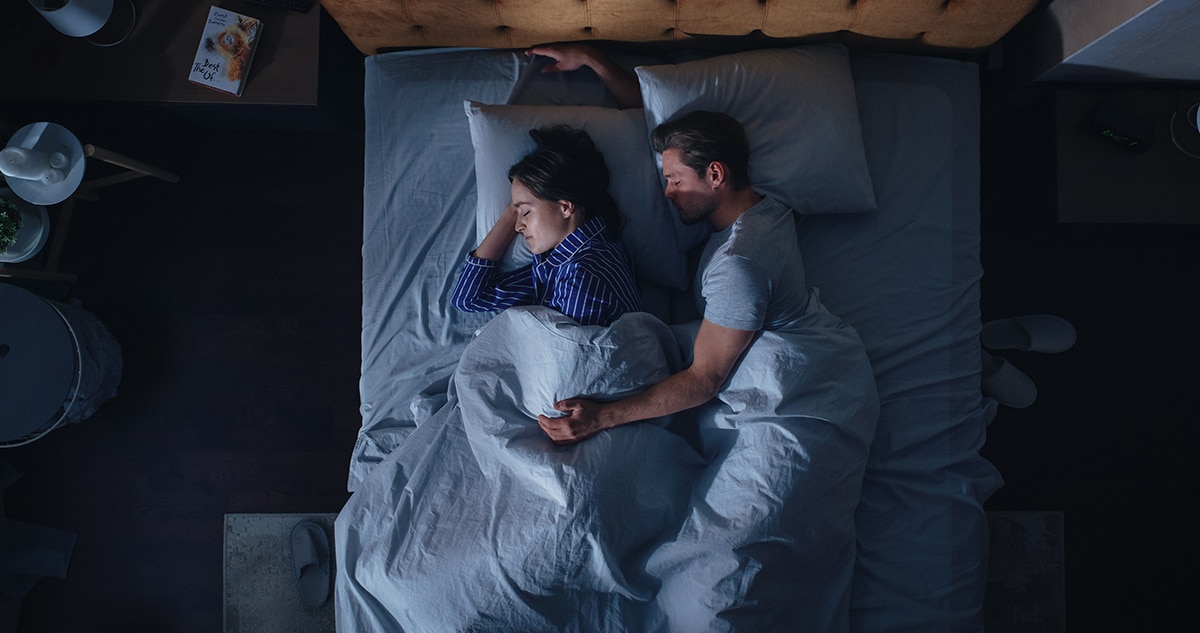
While standalone, battery-operated carbon monoxide detectors from the hardware store are better than nothing, they have a significant limitation: they only alert the people currently inside the home, and only if those people are conscious and able to hear the alarm.
If you are away at work and a CO leak occurs, your pets are left entirely unprotected. If a leak occurs while you are sleeping and the concentration rises so quickly that you lose consciousness before the alarm wakes you, a standalone detector cannot call for help. This is why integrating carbon monoxide detectors into a professionally monitored home security system is the safest choice for your family, and it is a core part of what ABF Security has offered St. Louis homeowners for nearly five decades.
When a monitored carbon monoxide detector is triggered through ABF Security's system, it does more than just sound a loud siren. It instantly sends a signal to a 24/7 monitoring center staffed by trained professionals. Those professionals immediately attempt to contact you to verify the emergency. If you do not answer, or if you confirm the emergency, the monitoring center will dispatch the local fire department and emergency medical services to your home immediately, even if you are miles away.
Furthermore, ABF Security's systems are fully interconnected. As the Missouri Division of Fire Safety recommends, when one detector senses carbon monoxide, every alarm in the house will sound simultaneously, ensuring that a leak originating in the basement immediately alerts the family sleeping on the second floor. This level of whole-home coordination is simply not possible with individual, standalone detectors.
For homeowners across St. Louis, St. Charles, and the surrounding counties, trusting ABF Security for your life safety installation means your detectors are placed correctly by certified technicians, hardwired for reliability, and backed by a professional monitoring team ready to dispatch help the moment a threat is detected.
Maintenance and Testing
Installing carbon monoxide detectors is not a "set it and forget it" task. To ensure your family remains protected, you must maintain the devices properly.
Test monthly by pressing the test button on each detector to ensure the siren sounds and the internal circuitry is functioning. Change the batteries annually. Even if your detector is hardwired, it likely relies on a backup battery in case of a power outage. A good rule of thumb is to change them when you adjust your clocks for Daylight Saving Time. Check the expiration date printed on the back of the device, as most detectors have a lifespan of 5 to 7 years and must be replaced before the sensor degrades. Finally, keep them clean by dusting and vacuuming the outside of the detectors regularly to ensure the vents remain clear of debris.
If you are unsure whether your existing detectors are still within their service life or placed in optimal locations, our team at ABF Security offers home life safety assessments for St. Louis area residents. Our technicians can evaluate your current setup, identify any gaps in coverage, and recommend the right solution for your home.
Keep Your St. Louis Home Safe: The Right Detectors in the Right Places
Protecting your home from carbon monoxide requires more than just purchasing an alarm; it requires strategic placement, regular maintenance, and a clear understanding of the risks. By installing detectors on every level of your home and outside all sleeping areas, you create a critical safety net that can wake your family in the event of a dangerous leak.
For homeowners in the St. Louis metro area, including St. Louis and St. Charles counties in Missouri, and Madison, Monroe, and Saint Clair counties in Illinois, ABF Security is your trusted local partner for complete life safety protection. With nearly 50 years of experience, professional installation, and 24/7 alarm monitoring, our team ensures that your carbon monoxide detectors are not just present in your home, but positioned, interconnected, and monitored to provide the fastest possible response when it matters most.
Ready to upgrade your home's life safety system? Contact ABF Security today to speak with one of our residential security specialists.
FAQ
1. How many carbon monoxide detectors do I need in my home?
At a minimum, you need one carbon monoxide detector on every level of your home, including the basement, and one outside of every separate sleeping area. For a standard two-story home with a basement and bedrooms on the top floor, you would need at least three detectors. ABF Security's technicians can walk through your home and determine the exact number and placement required for complete coverage.
2. Can I use a combination smoke and carbon monoxide detector?
Yes. Combination smoke and CO detectors are highly effective and reduce the number of devices you need to install on your walls and ceilings. However, ensure they are placed in locations appropriate for both smoke and CO detection, and verify that they are UL-listed for both hazards. ABF Security installs combination life safety devices as part of our comprehensive residential security packages.
3. Will a carbon monoxide detector detect a natural gas leak?
No. Carbon monoxide detectors are specifically designed to detect CO gas, which is a byproduct of combustion. They will not detect raw natural gas or propane leaks. To detect explosive gas leaks, you need a separate explosive gas detector. If you are concerned about multiple gas hazards in your home, speak with an ABF Security specialist about a complete life safety evaluation.
4. What should I do if my carbon monoxide alarm goes off?
If your CO alarm sounds, do not try to find the source of the leak. Immediately evacuate everyone, including pets, to fresh air outdoors. Once safely outside, call 911 or your local fire department. Do not re-enter the home until emergency responders have cleared the building and declared it safe. If your detectors are monitored through ABF Security, our monitoring center will already be contacting you and coordinating emergency dispatch on your behalf.
5. Why is my carbon monoxide detector beeping every 30 seconds?
A continuous, loud siren indicates a carbon monoxide emergency. However, a single chirp or beep every 30 to 60 seconds usually indicates a low battery or an end-of-life warning. Check the back of the detector or the user manual to decipher the specific chirp pattern, and replace the battery or the unit immediately. ABF Security customers can contact our support team for guidance on interpreting alarm signals.
6. Do I need a carbon monoxide detector if my home is all-electric?
If your home relies entirely on electricity for heating, cooking, and hot water, and you do not have an attached garage or a wood-burning fireplace, your risk of CO poisoning is extremely low. However, if you ever use a portable generator during power outages, a CO detector is still highly recommended. ABF Security can help you assess your specific home's risk profile and recommend the appropriate level of protection.
7. How long do carbon monoxide detectors last?
Carbon monoxide detectors do not last forever as the chemical sensors inside them degrade over time. Most detectors must be replaced every 5 to 7 years, though some modern units have a 10-year lifespan. Always check the expiration date printed on the device. ABF Security can help you track the service life of your detectors and proactively schedule replacements before they expire.