If you run a business in the St. Louis area, you can’t afford confusion about your commercial fire alarm system. You’re juggling fire codes, inspections, and monitoring while just trying to keep your doors open and your team safe.
This guide answers the most common questions local business owners ask about commercial fire alarms, explaining what you’re required to have, how systems work, how often they need to be inspected, and what to expect from a local provider like American Burglary & Fire Inc. Use it as a quick reference before your next fire inspection, build‑out, or remodel, so you can make faster decisions, avoid last‑minute surprises, and feel confident your building is protected.
- What is a commercial fire alarm system?
- How much does a commercial fire alarm system cost?
- How does a monitored commercial fire alarm work?
- What’s the difference between residential and commercial fire alarms?
- What components are typically included in a commercial fire alarm?
- How often do commercial fire alarms need to be inspected?
- Why is UL‑listed fire alarm monitoring important?
- What are common mistakes businesses make with fire alarm systems?
- How do commercial fire alarms integrate with security and access control?
- How do I choose a commercial fire alarm company in the St. Louis area?
1. What is a commercial fire alarm system?
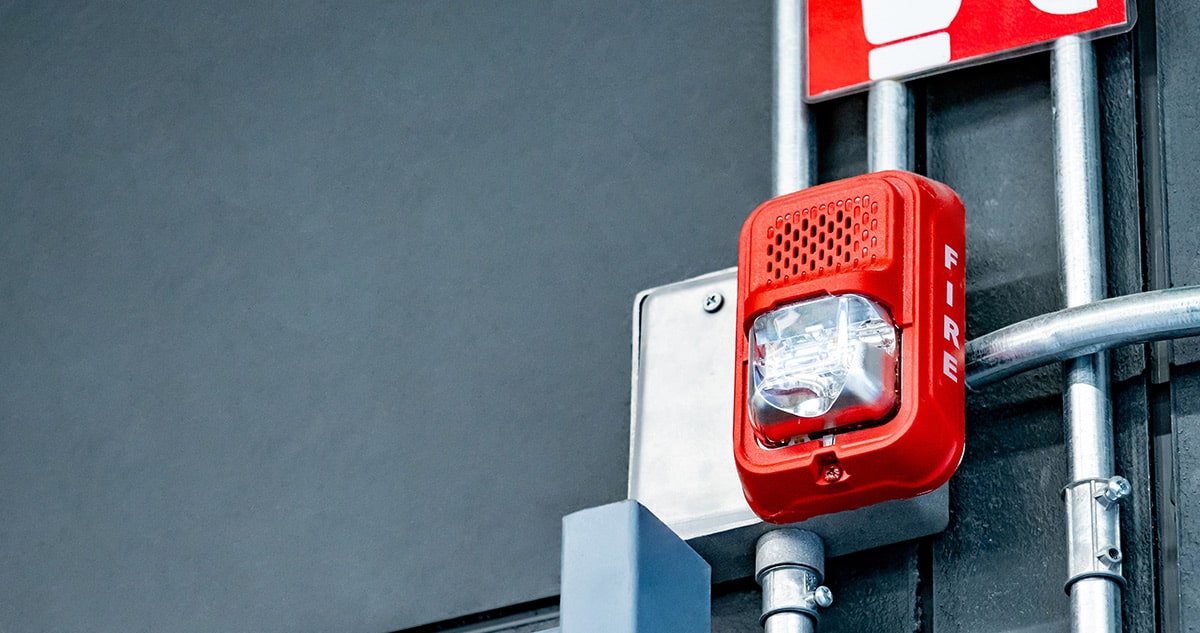
A commercial fire alarm system is a code‑compliant network of devices that detect fire (smoke, heat, flames), alert occupants, and automatically notify a monitoring center and first responders. In a typical system you’ll see smoke and heat detectors, manual pull stations, notification appliances (horns, strobes), control panels, and connections to sprinklers and monitoring. For St. Louis businesses, systems must be designed and installed to meet national standards like NFPA 72 plus local building and fire codes.
2. How much does a commercial fire alarm system cost?
There’s no one‑size‑fits‑all price, because cost depends on building size, layout, occupancy type, number of devices, and whether you’re retrofitting an older building or installing in new construction.
In general, your total cost will include:
- System design and hardware: control panels, detectors, notification appliances, power supplies, and cabling.
- Installation labor: technicians installing, programming, and testing the system.
- Monitoring and inspections: ongoing monthly or annual fees for central station monitoring and code‑required inspections.
For an accurate estimate, most St. Louis businesses start with a free or low‑cost site evaluation and proposal from a local provider like ABF Security.
3. How does a monitored commercial fire alarm work?
Here’s the simple version of how a monitored system works in your building:
- Detectors or pull stations sense smoke, heat, or someone activating an alarm.
- The fire alarm control panel receives the signal and activates horns, strobes, and other notifications.
- The panel sends a signal to a UL‑listed central monitoring station.
- Trained operators verify the alarm (if possible) and dispatch the fire department and notify your contacts.
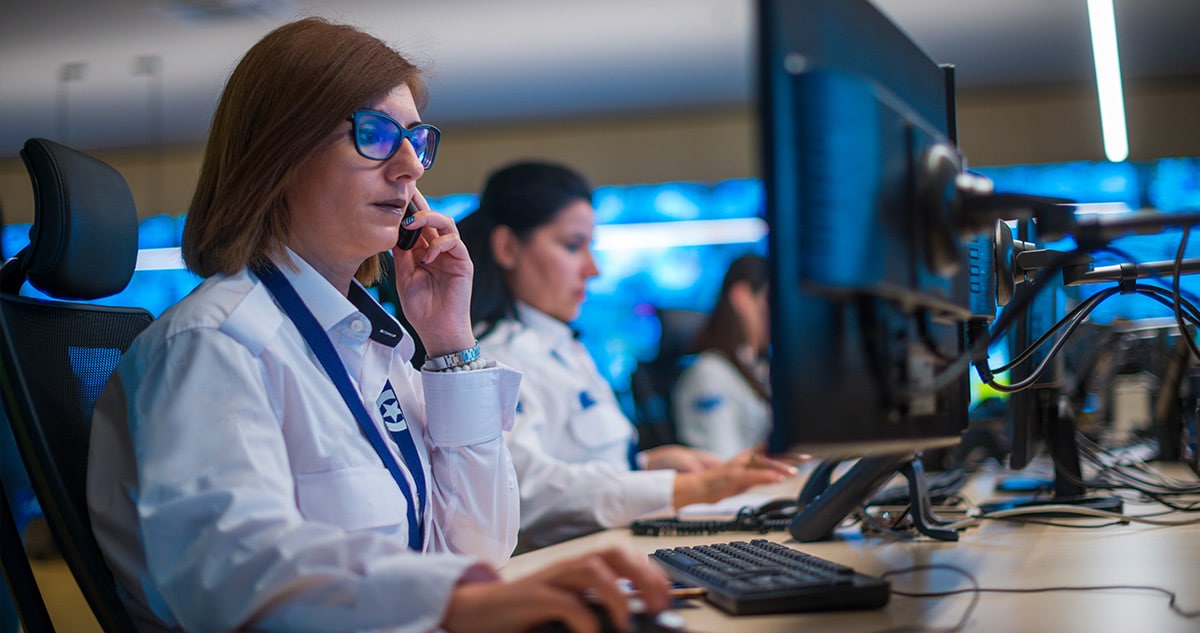
At ABF Security, your signals are processed through a UL‑certified monitoring center recognized as a CSAA Five Diamond Central Station and is staffed by highly trained operators, not generic ‘call center’ staff. Based in the St. Louis area, this team is dedicated to fast, reliable alarm handling, so your business gets the focused attention it deserves when every second counts.
4. What’s the difference between residential and commercial fire alarms?
Business owners are often surprised that commercial systems are not just “bigger house systems.” Here are some key differences.
| Aspect | Residential Fire Alarms | Commercial Fire Alarms |
|---|---|---|
| Code requirements | Basic smoke alarms, less complex codes | Detailed NFPA 72, IBC, and local fire codes |
| System design | Stand-alone detectors, often not monitored | Engineered systems with detection, notification, and integration |
| Monitoring | Optional in many homes | Commonly required or strongly recommended |
| Scale & complexity | Single dwelling, few devices | Multi-story, multiple zones, special hazards |
Because commercial systems are more complex and more regulated, you want a provider with specific commercial design, installation, and inspection experience.
5. What components are typically included in a commercial fire alarm?
Most commercial fire alarm systems in the St. Louis metro include a similar “core” set of components, customized to the building.
Common pieces include:
- Fire alarm control panel (FACP): the “brain” of the system that receives signals and controls notification.
- Smoke and heat detectors: detect smoke, rising temperatures, or specific gases.
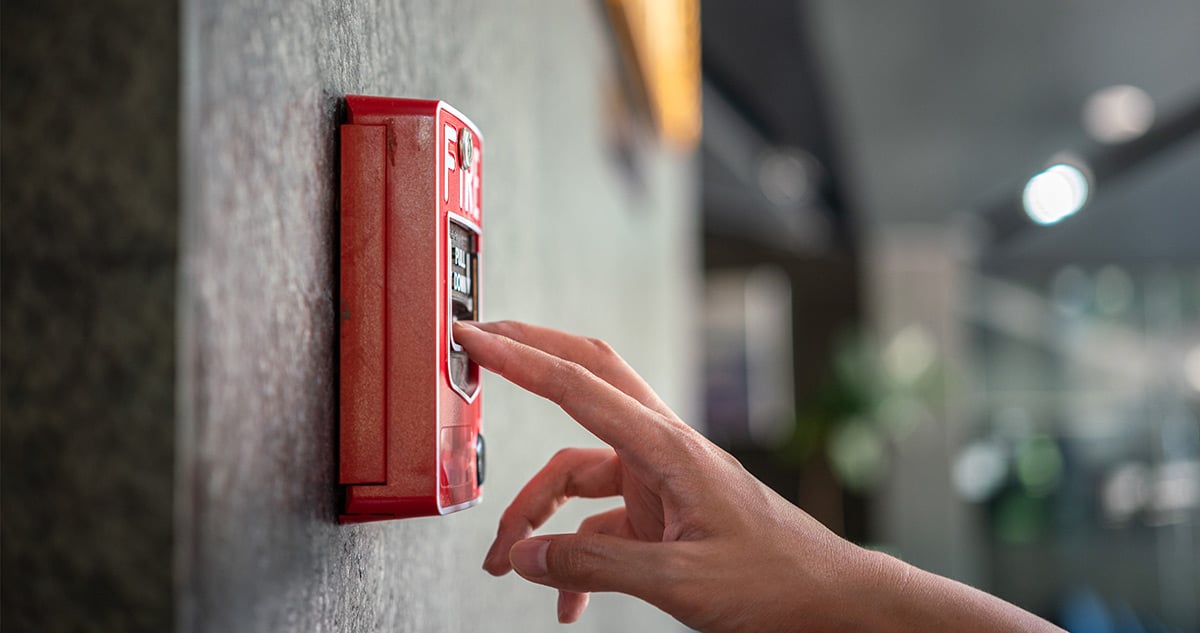
- Manual pull stations: allow occupants to trigger an alarm at exits or strategic spots.
- Notification appliances: horns, strobes, speakers, and visible strobes that alert occupants to evacuate.
- Sprinkler and suppression interfaces: tie into fire sprinklers or special suppression systems where required.
- Monitoring communicators: send alarm signals to a UL‑listed central station via phone, cellular, or IP.
In many commercial buildings, the fire system also connects to doors, elevators, emergency lighting, and HVAC to support safe evacuation.
6. How often do commercial fire alarms need to be inspected?
Fire alarm inspections are not just “best practice”, they’re required. NFPA 72 and local fire codes specify inspection, testing, and maintenance intervals for detectors, notification devices, panels, batteries, and communicators.
While exact schedules can vary by jurisdiction, common requirements include:
- Annual inspections and testing of the system by a qualified technician.
- More frequent checks or tests for specific components (like monthly visual checks for certain devices).
If you’re in St. Louis County, St. Charles County, or metro‑east Illinois, your local fire marshal or building department may have additional inspection expectations on top of NFPA 72.
7. Why is UL‑listed fire alarm monitoring important?
A UL‑listed monitoring center meets strict third‑party standards for reliability, redundancy, staffing, and response. That matters in a fire, where seconds count and you need confidence the signal will be received and acted on quickly.
ABF Security operates a UL‑certified monitoring center and is recognized as a CSAA Five Diamond Central Station, a designation only a small percentage of monitoring centers achieve. For St. Louis businesses, that means your fire alarms are handled locally by a team trained and audited to national standards.
8. What are common mistakes businesses make with fire alarm systems?
Looking at common pitfalls can help you avoid costly problems, failed inspections, and unsafe conditions. Frequent mistakes include:
- Using an installer who doesn’t understand local codes: systems may not meet St. Louis or county requirements, leading to rework or fines.
- Improper device placement: poorly located detectors, pull stations, or notification appliances reduce effectiveness and may violate code.
- Neglecting inspection and maintenance: skipping required testing leads to failed devices, nuisance alarms, and failed inspections.
- Not integrating with other life‑safety systems: missing links to sprinklers, elevators, or access control can slow evacuation.
Working with a local, experienced life‑safety provider dramatically reduces these risks because they design, install, and maintain systems with code compliance and long‑term performance in mind.
9. How do commercial fire alarms integrate with security and access control?
Many St. Louis businesses want their fire alarms to “talk to” other building systems for smoother operations and safer evacuation. Common integrations include:
- Security systems: coordinated monitoring so both intrusion and fire signals go to the same central station, simplifying response and billing.
- Access control: unlocking specific doors on alarm so people can exit quickly, while keeping other areas secure.
- Mass notification: using speakers and messaging to communicate evacuation instructions or emergency information.
Because ABF Security provides security systems, fire alarms, access control, and mass notification under one roof, you can design an integrated life‑safety solution instead of a patchwork of separate systems.
10. How do I choose a commercial fire alarm company in the St. Louis area?
When you’re comparing providers, you’re not just shopping for hardware, you’re choosing a long‑term safety partner for your business. For a St. Louis‑area business, look for:
- Local experience and code knowledge: proven work in St. Louis, St. Charles, and metro‑east Illinois, with technicians who know local fire marshals and permitting processes.
- UL‑listed monitoring: central station certified by UL and recognized for high standards, such as CSAA Five Diamond.
- End‑to‑end services: design, installation, monitoring, inspection, and service all from the same company.
- History and reputation: years in business, volume of installed systems, and local references or reviews.
ABF Security has been protecting commercial customers throughout the extended St. Louis metro since 1978 and has installed thousands of security and fire systems in the region. As a local company based in Fenton, ABF Security focuses specifically on the needs and code requirements of area businesses.
ABF Security: Your Local Partner for Code‑Compliant Fire Alarms
If you operate a business in the St. Louis metro and need a new fire alarm system, an upgrade, or help passing fire inspections, ABF Security can design, install, monitor, and inspect a system tailored to your facility. Instead of guessing what the fire marshal wants, you get a local team that handles the details, explains your options in plain English, and keeps your system ready for the next inspection.
Call our commercial fire alarm team today to schedule a walkthrough or request a quote, and we’ll help you understand exactly what you need and what it will cost before you commit to anything. ABF’s mission is to protect the St. Louis community with intelligent security and fire systems, backed by local monitoring and service from a team that lives and works in the same region you do, so you always have knowledgeable local support when it matters most.